


Safeguarding: Safeguarding and Cultural Sensitivity
Wednesday July 1, 2026
Dear Brother Missionaries of the Sacred Heart,
Dear Members of the Chevalier family, Dear Readers,
In the last issue of our Bulletin, we introduced you to our Congregational Safeguarding Commission of Minors and Vulnerable Persons. As you have seen, this body is at the same time mixed, international and intercultural. It brings together people with varied skills and backgrounds in the fields of protection, psychology and canon law.
Its mission is to support our entities in the establishment and strengthening of a true culture of prevention, attentive to local realities and the environments in which we live and carry out our mission.
It is in this spirit that the Safeguarding Office organized, last May, an online meeting with the Provincials and the Unions Leaders on the theme: “How to form a Safeguarding team or committee based on existing models within the Congregation”. While this initiative has fostered enriching exchanges, the low participation rate of the leaders of our Provinces and Unions who was supposed to be there leaves a feeling of incompleteness and reveals a worrying reality: for some entities, this issue is not yet among the priorities.
However, several participants, convinced of the urgency of a more assertive congregational commitment, proposed the creation of a formation platform for the provincial delegates in charge of this area. With the impetus and support of local Leaders, we can contribute together to the emergence of a real culture of prevention. As the saying goes: “Prevention is better than cure.” Let us not wait until it is too late to develop safe environments and adapted systems through the training, awareness and empowerment of our members and collaborators, starting with families and the initial training of our young confrères.
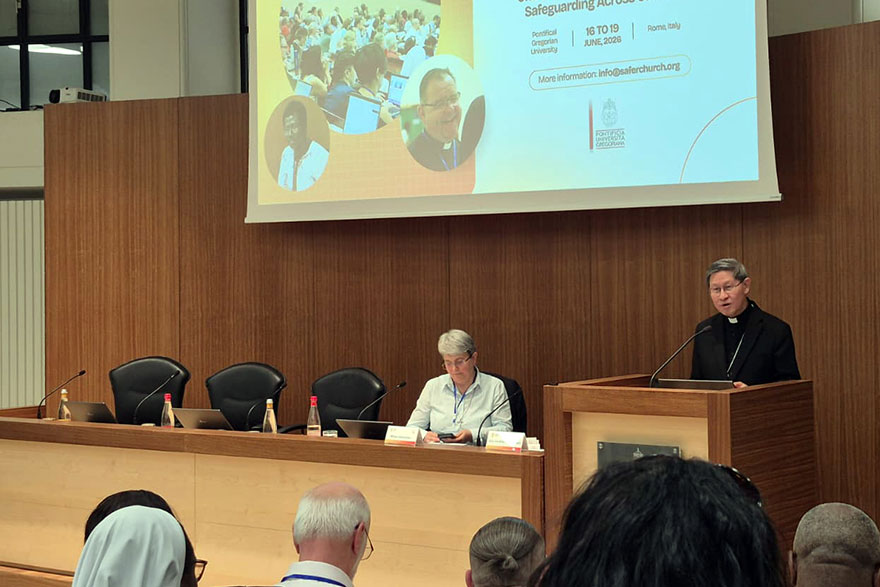
In the same line, in June we participated in the International Safeguarding Conference organized by the Institute of Anthropology (IADC) of the Pontifical Gregorian University (Rome). Under the theme “One Commitment, Many contexts: Safeguarding Across Cultures”, this meeting highlighted the essential role of the cultural dimension in any prevention and support approach.
The various interventions stressed that culture is a fundamental component of human identity. It profoundly influences values, behaviours, social relationships and the way in which people’s vulnerability and safety are perceived. Because it shapes our understanding of responsibility, authority, harm and care for the most vulnerable, any policy in this area must be based on real cultural competence. No effective approach can be based on one-size-fits-all approaches or one-size-fits-all solutions; on the contrary, it requires a detailed understanding of local realities, beliefs, traditions and lived experiences.
This vision is based on cultural humility, active listening and recognition of the knowledge present within the communities. It calls for collaboration with recognized local leaders and “cultural interpreters,” for the use of accessible language over technical or legal vocabulary, and for the participation of all segments of society. The objective is to set up mechanisms that are understood, accepted and supported by the communities themselves.
The speakers also recalled that commitment in this area must be both personal and collective. Respect for cultures and traditions cannot be dissociated from the unconditional protection of human dignity. While practices must be adapted to local realities to remain relevant and effective, culture should never be used as a pretext for abuse, exploitation or any other form of violence.
It was also stressed that the creation of safe spaces relies on trust, the removal of barriers to reporting – whether physical, social or cultural – as well as the ability to approach sensitive or taboo topics with discernment. Institutions, and more particularly religious communities, are called to be places of refuge, healing and accompaniment, where victims are welcomed with respect, listening and compassion.
Ultimately, sustainable action is based on co-construction with communities, valuing diversity, respectful communication and the ability to understand differences before making judgments. Cultural plurality is not an obstacle; It can become a valuable resource for strengthening prevention, vigilance and attention to the most vulnerable.
It is from this perspective of cultural sensitivity that we orient our activities. May our initiatives, both at the local and congregational levels, contribute to the growth of an authentic culture of protection at the service of the dignity and security of all.
Didier Mbela Bongoy, MSC. UAF
(Safeguarding Desk Coordinator)