


Reflection: The drafting phase of the Positio has begun
Wednesday July 1, 2026
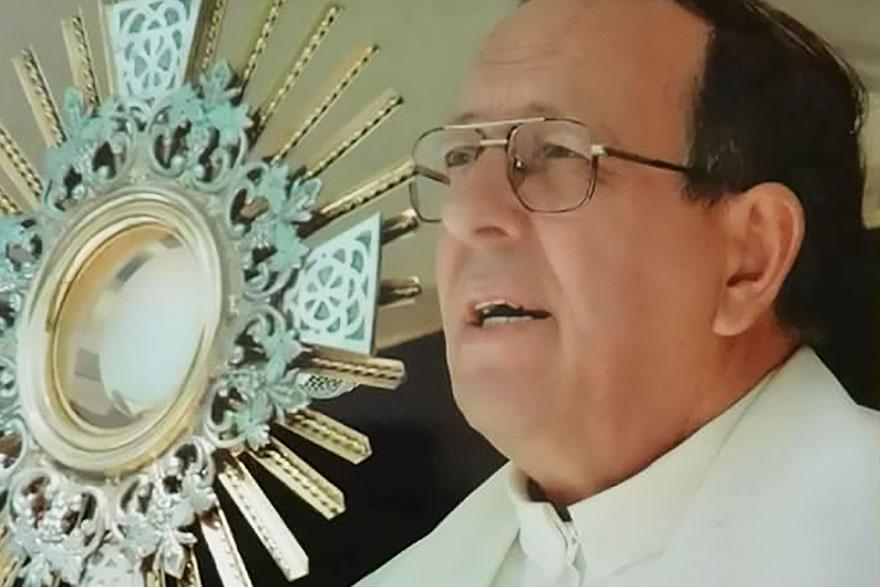
As part of the process for the beatification of Fr Emiliano Tardif, MSC.
Fr Emiliano Tardif was a Missionary of the Sacred Heart (MSC) and a well-known preacher within the Catholic Charismatic Movement. He began his missionary work in the Dominican Republic shortly after being ordained a priest in Canada. After years of intense work, he fell seriously ill. Pulmonary tuberculosis forced him to return to his home country, where he was admitted to hospital with a rather bleak prognosis. He was expected to remain in hospital for at least a year to recover. All this is beautifully recounted in the film based on his life, which premiered in Spain on 8 May: ‘Día 8. El soplo del espíritu’.
Emiliano was a missionary convinced that his work should be amongst the most disadvantaged people, those in need of the compassionate love of Jesus. Fr Joaquín Herrera, MSC, postulator of the cause, explains that there were two key factors in Fr Tardif’s missionary character. Firstly, his family upbringing. His parents were deeply religious and his father was particularly generous. He used to say of his father that he possessed the gift of poverty. Secondly, the charism of the Missionaries of the Sacred Heart, who carry the message of Jesus throughout the world—a message of a love that is close, tender, compassionate, merciful, strong and constant.
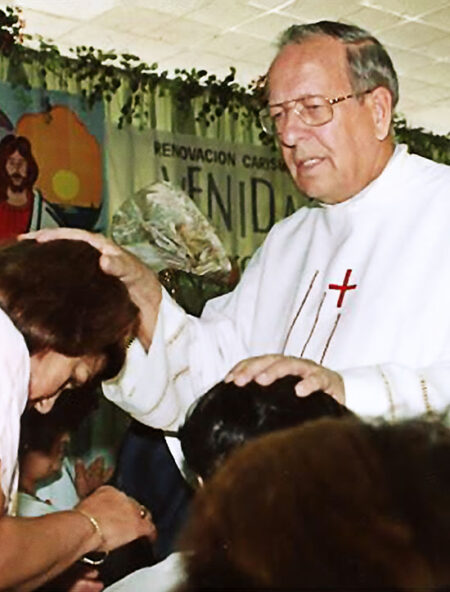
Whilst he was in hospital, a group from the Catholic Charismatic Movement offered to pray for his healing. Emiliano’s experience with them had not been very positive in the parishes where he served, but he agreed, somewhat reluctantly. He said that, as they prayed for him, he felt a warmth in his chest and began to get better. Days later, the doctors could not explain how, but they confirmed that the tuberculosis had disappeared.
“His healing,” says Fr Joaquín, “turned him into a man of prayer. His rediscovery of the living God led him to find another way to address the social problems of Latin America. But his emphasis was no longer so much on social advocacy as on presenting a living Jesus in accordance with our MSC charism: approachable, compassionate, merciful, strong and steadfast. The truth is, I think God is calling me too to be more of a man of prayer. You can’t work with honey without getting a bit of it on you. I hope it sticks to me too. I believe I feel called to pray this work, to internalise it. It’s like when you’re invited to lead a retreat. You do it thinking about how to bring the Gospel to those you’re going to speak to, but you realise that it’s for you as well. As you work to give of yourself, the Lord tells you that it’s for you too.”
On his return to the Dominican Republic, Emiliano Tardif divided his time between parish ministry and preaching, but shortly afterwards he asked his superiors to allow him to devote his work to the Lord’s call to preach a living Christ. Fr Joaquín explains it this way: “He combined the Spirituality of the Heart, characteristic of the MSCs, with the missionary zeal of the New Evangelisation. He made devotion to the Sacred Heart the centre of his spiritual life and proclaimed the Gospel of merciful love by presenting the living Jesus, determined to let the poor of this world know that God loves them, especially the sick. He was always available, placing his trust in God, who is love.”
He recounts a very special anecdote that happened to him involving Fr Tardif. During a conversation, he told Fr Tardif that they were like donkeys, carrying heavy loads to serve others. He never imagined that those words would remain etched in his memory and that, years later, he would write the book *I Am Jesus’ Donkey*.
Fr Herrera knew him before his healing, but above all afterwards, when he was already committed to proclaiming that living Jesus and cultivating the gift of healing. “I saw a different Emiliano. An Emiliano who remained very much an MSC, but was now completely open to the Holy Spirit, who led him down paths he could never have imagined. As a person, he remained true to himself, with his willingness to help and his hard-working attitude—though he did take better care of his health—and he was very humble and cheerful. After the healing, I saw him as more open, with a greater ability to perceive God’s love. With a deeper conviction in the words of Jesus, ‘Whoever believes in me will also do the works that I do and will do even greater ones’ (Jn 14:12), this finding concrete expression in his ministry of healing. One could see a change in the vitality of his spirit; he was stronger and fully committed to his new mission.”
He presented himself in a simple manner, without making a fuss about his education or qualifications. He spoke of the experience of the living Jesus who is at work today—a Jesus who loves. He felt that he had been chosen for this very purpose. He was the same whether dealing with a humble person in the Dominican Republic or with Queen Fabiola in Belgium. He made no distinction between people. Very prominent people often attended his gatherings. In fact, when he died, the President of the Dominican Republic declared a day of national mourning. This was not merely an expression of grief from the people—the humble folk he had helped and for whom he had become a missionary—but also came from the highest echelons of society, in recognition of his work.
“I see the work on the Positio as one of God’s ‘traps’,” explains Fr Joaquín Herrera jokingly. “I have just left an important post in Rome for the Congregation; I was due to return as a missionary to Central America, where I have been for decades, but I decided to return to Spain. And now that I find myself with plenty of time to devote to more ‘intellectual’ tasks, the drafting phase of the Positio for the cause of Emiliano Tardif is beginning. This is work I have already carried out with the Blessed Martyrs of El Quiche in Guatemala. I am looking forward to it; I know it will be very demanding, but God will decide. I hope to remain in good health to see the work through to the end. Perhaps I will be able to submit the completed Positio in a year and a half.”
“Simply by having been entrusted with this task and whilst awaiting the 12 volumes of information from the diocesan phase, I am already feeling the gift of prayer, the need to pray. I do not know what this process holds in store for me; the Holy Spirit will shed light on it. The text on the card I received at my ordination read: ‘Behold, like the clay in the potter’s hand, so are you in my hand’ (Jeremiah 18:6). My experience is that the Potter has guided me through my missionary life, shaping a host of instruments from his clay. It is not worth dwelling too much on what He will do with this new clay; rather, I must let myself be guided and keep moving forward. He lifts me up, He brings me down; He turns me into a vase for a royal hall and, a few years later, makes me a bedpan in a hospital. As a missionary, one must always be available; the important thing is to know how to be clay in God’s hands. It is one of the things I have rediscovered in Emiliano—or at least become aware of—that he, too, knew how to let go of many things in order to fulfil what God had entrusted to him: to proclaim the living Jesus and to heal people facing great difficulties.”
Javier Trapero. Spain