


Walking Together
Wednesday April 8, 2026

My Experience as an MSC Leader Living Synodality in the Parish
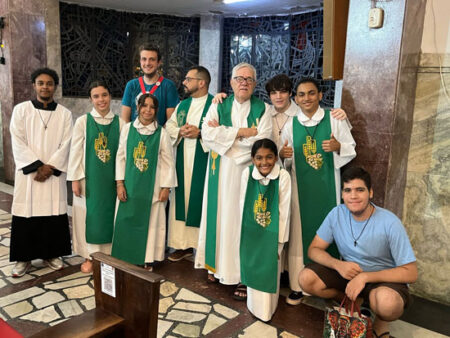
For me, being a leader in the Church and in the Congregation has never been just about performing a function or coordinating activities. It means learning, day after day, to live what the Church has rediscovered with such force: the spirit of synodality—the call to walk together.
Especially after Pope Francis’ call for a more synodal Church, and being able to immerse myself a little in learning what we call the Spirituality of the Heart, I understood that leading is not about being at the front, but being in the middle — listening, discerning, and serving.
For me, synodality begins with listening. Before any pastoral planning, before any structural decision, there is the exercise of stopping and listening: listening to God, listening to leaders, listening to those who actively participate, and, above all, listening to those on the margins.
I have learned that walking together does not mean thinking alike, but discerning together. It is allowing the Holy Spirit to speak through the diversity of the community.
In parish practice, this translates into:
• Participatory processes in decision-making.
• Formation of co-responsible leaders.
• Real spaces for community listening.
• Integration between spiritual pastoral care and social commitment.
The current moment of the synodal journey here at the Shrine of Souls (the parish where I currently serve as pastor) is moving in two directions: attention to the physical structure of the Church so that it becomes a more welcoming environment and, above all, attention and care for the inner “home” of each faithful. We seek to involve people, listen to resistance, welcome suggestions, and transform projects into community processes. I increasingly feel that the parish needs to stop being “the priest’s church” or “the coordination’s church” and truly become everyone’s home.
I confess that living synodality requires conversion on my part. As a leader and knowing myself well, it is easier to decide alone. It is faster. But it is no longer evangelical. Walking together requires patience, humility, and trust. It requires letting go of control and trusting that the Spirit acts in the collective. It is a process of matanoia (conversion) because we need to mediate conflicts with serenity, value different charisms, not centralize decisions, and build communion before building projects.
One interesting thing I have noticed is the demand from parishioners who are willing to help in some way with the parish mission and MSC mission here where we are. I believe that one of the signs of synodality is when people feel like they are part of something, not just attendees. The mission expands. The sense of belonging grows.
I see this in celebrations, formation groups, and social and charity actions. These are not isolated events—they are expressions of a people learning to walk together.
Being an MSC leader in a parish has been for me a continuous exercise in listening, discernment, and communion. More than coordinating activities, I have sought to live the MSC charism and, above all, to lead from the Spirituality of the Heart, which implies a synodal style: the style of a Church that does not walk alone, but recognizes itself as the people of God on pilgrimage.
Walking together is more than a pastoral method. It is a spirituality. It is a commitment. It is a permanent conversion. And I believe that this is the path that the Spirit asks of us MSC leaders and the whole Church today.
Humberto Enrique, MSC. Rio de Janeiro Province