


Reflection: “Dios es amor – God is love”
Friday December 26, 2025
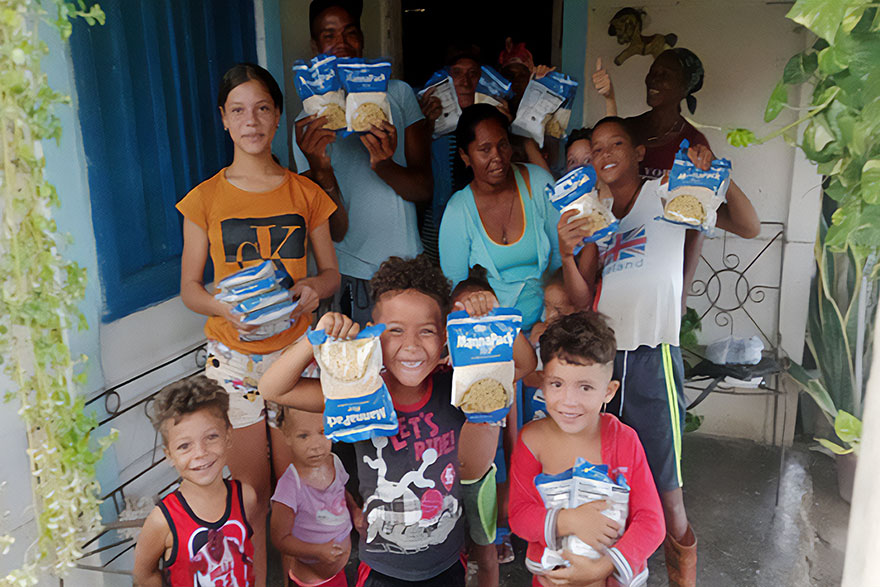
Reflections on Missionary Experience in Cuba.
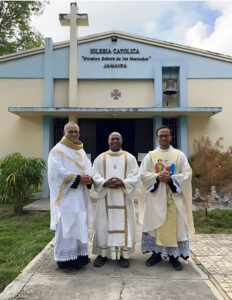
Dios es Amor, God is love, is a quote that describes how grateful I am to God. After receiving the grace of ordination as a deacon, I was entrusted by the Provincial Superior of MSC Indonesia to undertake a mission to Cuba in Latin America.
Honestly! I never imagined I would be sent on a mission overseas. But deep down, I believed this was God’s plan and His calling for me. Cuba is a communist country that has officially adopted socialism since the 1959 revolution.
Nevertheless, after Pope John Paul II’s visit (1998), which called for Cuba to ‘open itself to the world, and the world to open itself to Cuba,’ the country resumed allowing religious practices, including the Catholic Church. Geographically, Cuba is the largest island in the Caribbean, long and narrow, with an area of roughly 109,884 km².
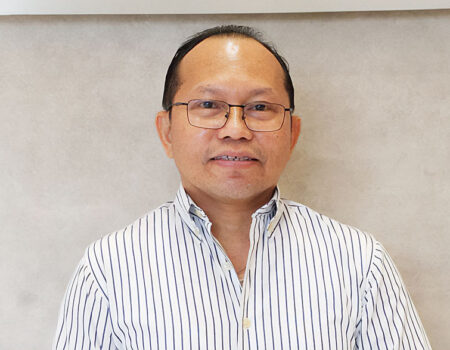
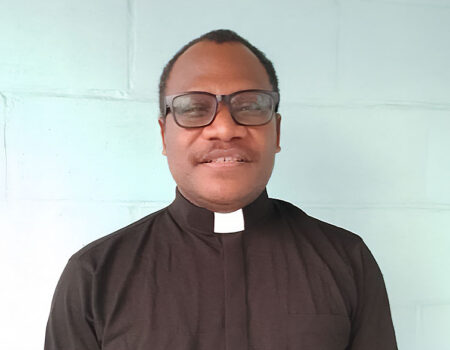
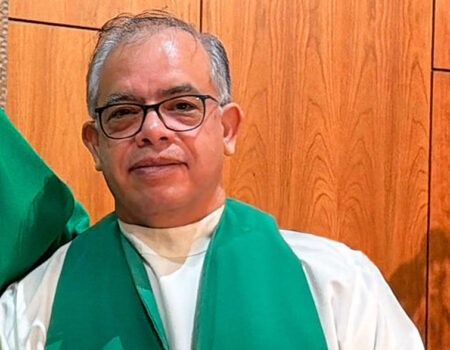
I arrived and was picked up by Padre Phillipus Seno Dewantoro MSC (Padre Felipe) in Havana (the capital city) on 15 November 2024. Then on Monday, 18 November, I began my ministry at the parish of Nuestra Señora de las Mercedes (Our Lady of Mercy). On 16 December 2024, Father Dicky Harold Joseph Ogi MSC (Father Dicky) arrived at the parish to serve together. He replaced Father Victor Kaanubun MSC (Father Victor), who later undertook a new mission in Ecuador.
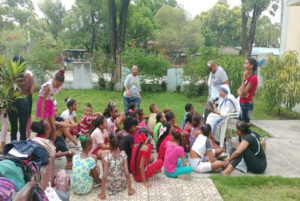
Thus, there are three of us in this community. MSC confreres from the Dominican Republic province formerly served this parish. They served there for approximately 11 years. This task was then handed over to us, the MSC Missionaries of the Indonesian Province.
On the occasion of meeting with the Provincial Father, P. Samuel Maranresy MSC, before the mission, he told me that my main task was: ‘to go to learn the language and culture while learning to be a priest in the mission field.’ So, I feel this mission is obvious: to learn to know and understand. I believe that God who calls will guide and direct me wherever He wants, which is always good. Therefore, this reflection is written with the fundamental spirit that God always loves me, because God is love, Dios es Amor.
Learning through service.
We serve in the Diocese of Guantánamo – Baracoa. This diocese is one of the administrative regions of the Roman Catholic Church in Cuba. It was established on 24 January 1998 by Pope John Paul II. Its territory covers the Province of Guantánamo and the municipality of Baracoa in eastern Cuba. The diocesan centre is located at the Cathedral of Santa Catalina de Ricci in Guantánamo, and it also includes a Co-Cathedral, the Basilica Co-catedral de Nuestra Señora de la Asunción in Baracoa. The number of Catholics in this region is around 200,000 (approximately 39-40% of the total population of around 500,000-510,000 in the diocese). This diocese is led by Mgr. Silvano Herminio Pedroso Montalvo, Pr.
Historically, this diocese is among the youngest in Cuba, having been formed through the expansion of the Archdiocese of Santiago de Cuba. Because it is relatively young, this diocese only has 13 parishes, including the parish we serve, the parish of Nuestra Señora de las Mercedes (Our Lady of Mercy)
By 2025, our parish will have five zones and 31 communities to serve. The number of parishioners served is around 1,000. The ministry tasks we carry out in the parish and communities are faith catechesis, celebrating the Eucharist, bringing Holy Communion to the sick, and providing food and drink assistance to those in need.
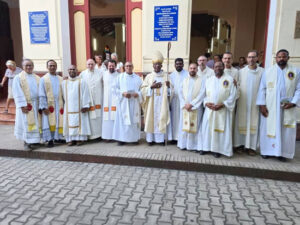
Eucharistic celebrations are usually held in each main zone and several nearby communities. Communities located in the highlands or mountains (Felicidad Zone and Palenque Zone) are typically visited twice a week (Wednesdays and Sundays). Wednesdays are used for catechesis and faith teaching, while Sundays are for Mass or worship services.
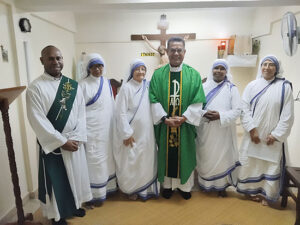
Weeks I and III focus on the Felicidad Zone. Weeks II and IV are dedicated to ministry in the Palenque Zone. In carrying out our ministry, we are supported by the Missionary Sisters of Charity and lay catechists. They are trained by us and the Missionary Sisters of Charity to teach the faith to the community.
I am thankful for the chance to learn how to serve the people. As a young MSC, I believe it is crucial to nurture a spirit of humility to grow. After a year in the Jamaica parish, I saw how vital pastoral presence is. I need to be there to greet people, share happiness with laughter and jokes, and offer support to keep their enthusiasm alive. I acknowledge that life for the people in the parish and across various provinces in Cuba is not easy. I recognise that serving here requires a spirit of sacrifice that comes from the heart.
The people face many life challenges. There are shortages such as a lack of food, limited access to clean drinking water, electricity available only for one or two hours a day or not at all, poor transport between villages and provinces, and many other struggles that are often shared with us. We experience this too because we live in the same area.
Amidst these struggles, we strive to be present, offering reassurance and strengthening their faith. With a spirit of ‘happy hearts’, we aim to touch the hearts of the people we serve. We are eager to listen to those in need and do our best to help. Honestly, we also face the same struggles with the restrictions imposed by the state.
Despite the many shortcomings we face, we remain committed to serving the people. Catechesis of the faith is very important for the community because many of them do not yet have a proper and accurate understanding of the teachings of the Catholic Church. Teaching must be delivered consistently so that they can grasp the message.
I realise how vital it is to cultivate a spirit of sacrifice and humility in service. All of this is for the salvation of the souls we serve. It also helps us fulfil the MSC’s mission to make the Sacred Heart of Jesus loved worldwide. Amen.
Agustinus Nicolaus Yokit, MSC (Indonesian Province)