


Chevalier family: Anchored in Hope
Saturday November 22, 2025
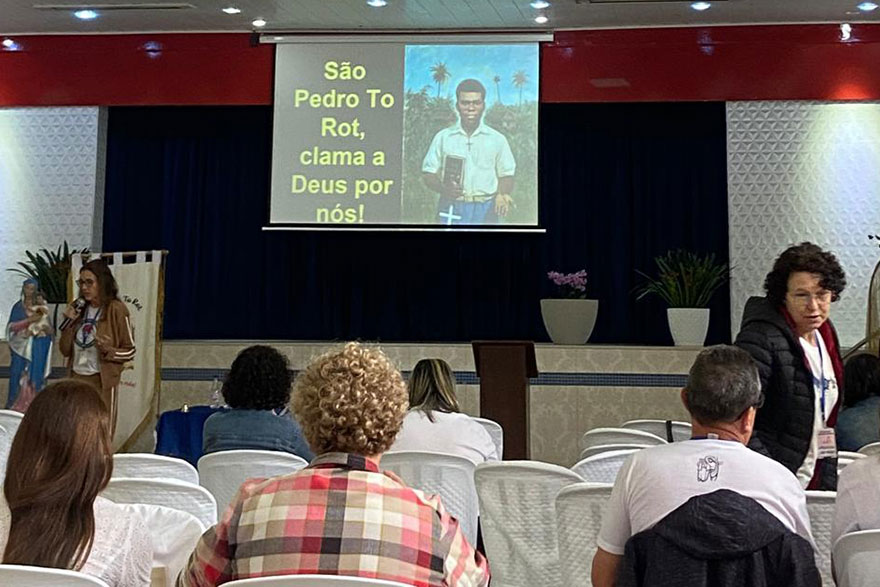
Harvest from the Chevalier Family’s 2025 Congress.
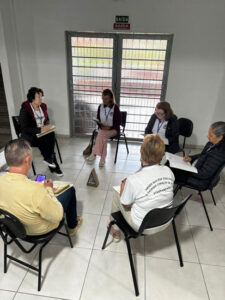
The 2025 Congress left us with a precious harvest. On the evening of Friday, 17 October, the prayer was prepared by the academic community of the Daughters of Our Lady of the Sacred Heart, and involved everyone in an atmosphere where Charism, Spirituality and Mission were intertwined at every moment. The significant presence of lay people and the proximity of the canonization of Peter To Rot, which took place two days later in Rome, made that night even more special. In silence and music, simple and profound requests resounded: that Jesus never let us walk alone, that He teach us to live in His presence, that our hearts belong totally to Him, and that the Holy Cross always be our joy.
Saturday, 18 October, began with a community breakfast in the recreational area of the NSSC College. Then, the proposal for coexistence and the methodology that would guide the Congress were presented. Then, led by Fr. Alex, we entered into a moment of study and learning about compassion and self-compassion. He showed us that compassion is born when we look at others with fraternity, allow ourselves to be moved by their frailties, and approach them with solidarity. The scene of Jesus with the widow of Nain, in Luke 7, revealed how compassion springs from the depths of our being, as a natural impulse of those who love without being bound by the judgement of the law. We discovered that if compassion is not exercised, it atrophies.
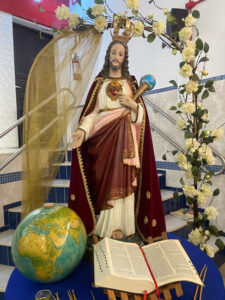
In this same inner movement, we were invited to look at ourselves. Self-compassion brings me closer to my own pain, generating the need to care for and recognise myself. It teaches us to care for ourselves with the same tenderness we offer to others. It does not isolate or produce self-pity, but strengthens self-esteem and inner freedom. Jesus teaches his disciples to withdraw to take care of themselves, Mark 6:31; to know how to dialogue with themselves in the challenges of life, according to Luke 4:1-13; he teaches not to run away from oneself, according to Luke 22:39-44; he announces the new commandment by remembering himself, see Matthew 22:39. He gave everything to humanity because he gave himself. We learn that we can be our own best friends or our worst enemies, and that spiritual maturity involves humbly including ourselves in our care.
In the afternoon, we return to the Word, delving deeper into Hebrews 6:19-20a: ‘Hope is like an anchor for our life. It is secure and firm, penetrating to the other side of the curtain of the sanctuary, where Jesus entered for us as a forerunner.’ Written by an unknown author of the second Christian generation around the 80s, it presents itself as a homily addressed to a community of Jewish converts who, in the face of persecution, suffering, and the delay in seeing final salvation, were in danger of losing their faith in Jesus as Saviour. They had difficulty accepting both the painful sacrifice of Christ and the suffering they themselves faced, remaining very attached to the cultic practices of the Old Testament. Hebrews reminds them that Jesus definitively overcomes the old institutions and shows the limits of the law: it is not legalism that saves or restores communion with God. Christ is not interested in the beauty of the temple or liturgical vestments, but in concrete life — in the sick, the excluded and the threatened — revealing that true worship is realised in mercy and dignity offered to those who suffer.
In the evening, despite the heavy rain, we held a procession through the streets of the neighbourhood with the image of Our Lady of the Sacred Heart, and then we participated in the Solemn Mass in which the laity renewed their consecration.
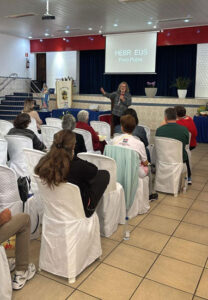

Sunday, 19 October, was dedicated to the Chevalier Family Assembly, with the theme JPIC — Justice and Peace in the Integrity of Creation. The morning was lived with great participation, following the method of Community Wisdom: prayer, silence, reading, new silence and sharing in which everyone spoke and everyone listened, seeking to recognise what the Spirit was saying. The starting point for reflection: What actions could we develop within this JPIC theme, which is a commitment of the Congregations inspired by Father Jules Chevalier? Concrete and simple proposals emerged, born of the desire to integrate faith and life: offering showers on the street for homeless people to bathe, cultivating organic community gardens, acting on behalf of poor children, encouraging food donations, recycling waste, reusing water, collecting empty medicine cartons and bottle caps.
In the final evaluation, the words reflected a profound inner movement. It was said that: ‘I felt like I was being whipped in my way of life; I felt good; it is necessary to awaken new attitudes; to learn to change my way of thinking.’ Many valued the learning, the welcome, the food, and the opportunity to better understand reality in order to act with greater clarity. The Community Wisdom method was recognised as a path that should continue to be lived in the different areas of mission. The Congress ended with an excellent lunch served on site.
Text adapted from the harvest of Getúlio Saggin, MSC (Curitiba Province-Brazil)