


Reflection: Reflection on Earthquake Emergency Relief
Friday December 26, 2025
Davao Oriental, Philippines.
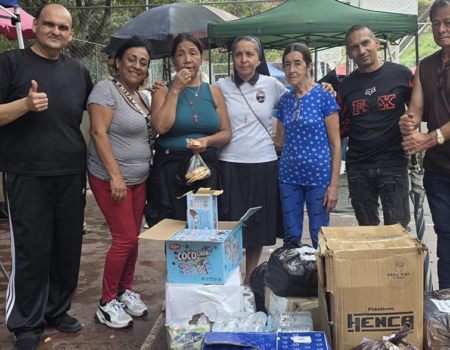
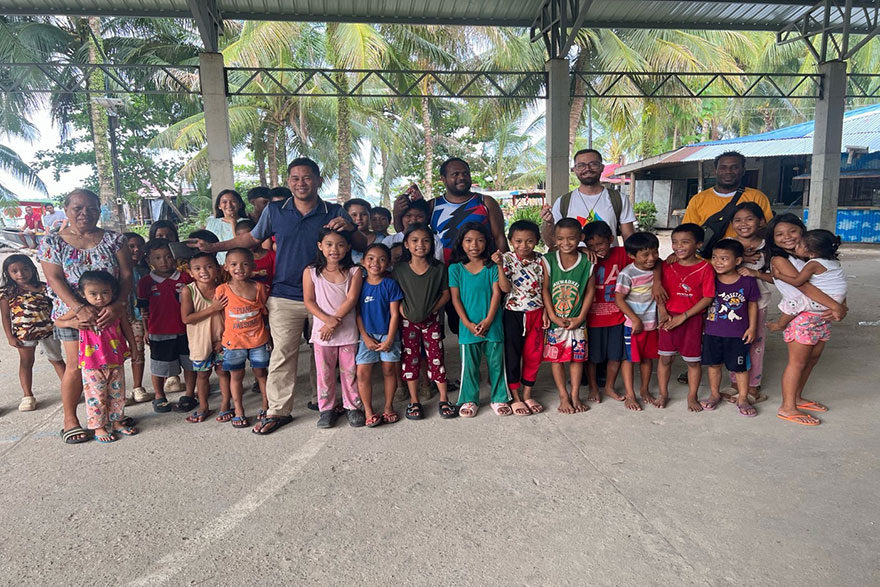
Five days after the 7.4 magnitude earthquake hit the southeastern region of the Philippines, our team rushed to the most affected communities to deliver emergency food relief and carry out Psychological First Aid (PFA) for those traumatised by the disaster.
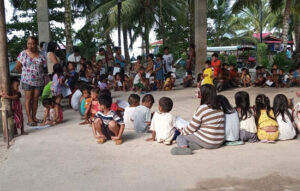
We joined a group of volunteers in partnership with the European Union, responding together to the cries of people who lost homes, livelihoods, and peace of mind.
What awaited us was both overwhelming and humbling—a vast crowd gathered in open spaces, anxious and restless as aftershocks continued to shake the ground from time to time. To bring some sense of order and safety, we began organising the crowd according to age groups, recognising that each group carried its own particular pain and need. Children required reassurance and calm; the elderly needed gentle presence; and families longed for food, comfort, and peace of mind.
Amid the chaos and uncertainty, we uncovered a profound truth: one of the most meaningful responses to disaster is presence, being with the people. Simply listening to their stories, sharing their silence, and letting them know they are not alone became an act of healing itself. We couldn’t remove their pain, but we could accompany it. We couldn’t undo the loss, but we could stand beside it.
The stories we heard were filled with fear, shock, and echoes of trembling hearts that still feared the next quake. Yet within those same voices, we also sensed a fragile strength—a resilience born from faith and shared suffering.
As Missionaries of the Sacred Heart (MSC), we live out the mission of Justice, Peace, and Integrity of Creation (JPIC). This experience became our first authentic encounter with putting that mission into practice amidst a tragic and wounded reality. Here, justice meant showing solidarity, peace meant listening, and integrity of creation meant standing in awe of both human fragility and divine compassion.
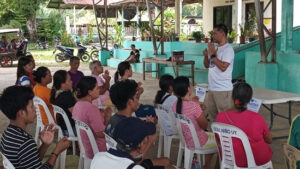
Echoes within from the Volunteers
Erick Bryan de Mattos, MSC. It was my first time experiencing an earthquake. In Brazil, we don’t have such opportunities, and this chance to participate in the MSC–European Union joint relief operation was truly transformative.
Responding to a natural disaster was new to me, but it became a genuine learning experience. I realised that even the smallest act of giving — a handful of food packs — can warm hearts and inspire gratitude. Each smile we received was a quiet reminder that faith, hope, and love stay alive even amid the ruins.
Bro. Hendrick Qoqletkop, MSC. Participating in earthquake relief operations was an eye-opening experience. Being with people who suffered so much reflected my own human vulnerability. Through Psychological First Aid (PFA), we listened to those traumatized by the tragedy. I learned to value teamwork and to see the unique gifts each person contributes. Although I had witnessed earthquakes before in Papua New Guinea, joining a relief team like this was entirely new to me. This experience pushed me beyond my comfort zone to reach out, to rescue, to save lives, and to rediscover the core of our mission. If the same situation occurs in Papua New Guinea again, I now know what to do. Yes, I handed out a piece of food, but I was the one who received so much more in return.
Bro. Anthony Tongala Victor, MSC. Joining the emergency relief efforts, I personally heard the people’s lamentations. Many believed it was the end of the world, the second coming of the Lord. Their words troubled me and made me ask: How can we truly help? How can we bring calm to those in distress?
Through this, I learned the ministry of presence — simply being there with them. While material aid like food packs was crucial, I realised that their deeper hunger was for compassion and connection. Our presence itself became a form of relief. Seeing their faces light up with smiles reminded me that hope can rise even from fear. In truth, they became my teachers, showing me what faith looks like in the midst of suffering.
Fr. Richie Gomez, MSC. One encounter profoundly moved me. A man approached after receiving relief goods and asked, ‘Father, can I request a Bible?’ At that moment, I realised how tragedy often prompts people to turn to God more deeply. As I listened to their stories, one described it as a ‘double trauma.’ The first was the earthquake itself; the second occurred when, after the quake, a tsunami alert was issued. Their island community was the epicentre, so everyone — children, mothers, elders — rushed to the boats, fleeing from the island in panic. Since then, aftershocks have continued. For days, they slept in makeshift tents, afraid to return home. Fishermen didn’t dare go to sea, and farmers avoided their fields, haunted by the question: What if it happens again and I am not with my loved ones? Listening to these stories was heartbreaking. Yet even in their fear, their faith remained firm. They showed me what it means to hope in darkness, to find God’s presence amidst trembling ground.
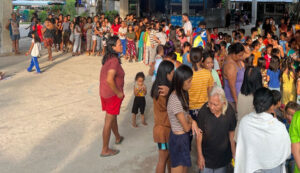
This experience of earthquake relief operations revealed that disasters are not only physical ruptures of the earth but also spiritual awakenings of the human heart. We learned that healing begins not only with food and medicine but with companionship and compassion — the simple reassurance that “you are not alone.”
Walking alongside those who suffer, we too undergo transformation. Their wounds become lessons for us; their endurance turns into our prayer. Amid the trembling earth, we find a deeper stillness, where the Heart of Christ beats with every heart daring to hope again.
Richie Gomes (Philippine Province)