


‘Delexi te’
Friday December 26, 2025
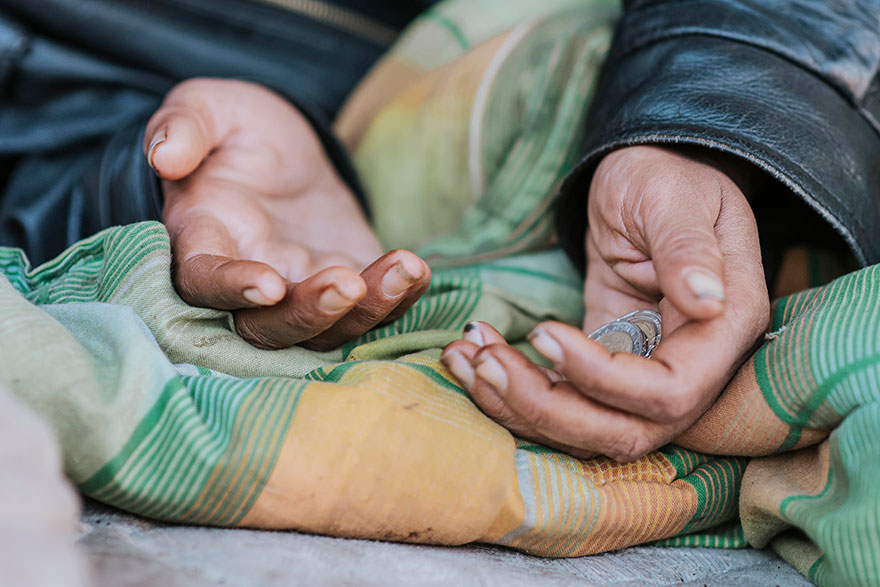
A call to change our perspective on the poor and poverty.
The call to contemplate and imitate the human and divine Heart of Christ in Delexit Nos opens the floodgates to a shift in our perspective of the poor in Delexi Te. This axiological conclusion stems from Pope Leo’s clear and implicit wish to carry on the intention of his predecessor (Delexi te no3). Christ, by revealing God’s love, showed himself as poor among men and made the poor the special recipients of the Good News. He made the poor ‘sacramentals’ of his presence, for ‘contact with those who have neither power nor greatness is a fundamental way of encountering the Lord of history’ (Delexi te no4). But encountering Christ in this humanity wounded by weakness, destitution, suffering, or deprivation calls for a conversion on the part of the disciple, starting with a change in how he views the poor and poverty.
1. Poverty, a complex and dynamic reality
In his Apostolic Exhortation, the Pope recognises that poverty is not a homogeneous phenomenon. It has many faces and manifests itself in different ways. According to the Pope, among the forms of poverty are “those who do not have the means to provide for their material needs, the poverty of those who are socially marginalised and do not have the means to express their dignity and potential, moral and spiritual poverty, cultural poverty, the poverty of those who find themselves in a situation of personal or social weakness or fragility, the poverty of those who have no rights, no place, no freedom” (no. 8).
In addition to its plural nature, poverty has a dynamic and expansive quality. Indeed, ‘to the old forms of poverty that we have become aware of and are trying to combat, new ones are added, sometimes more subtle and more dangerous.’ Thus, paradoxically, as society evolves, new forms of poverty are emerging.
This poverty, in its many forms and manifestations, constitutes a veritable ‘theological nest,’ where Christ speaks through the suffering of its victims. To hear him, we must first relearn how to see the poor differently.
2. Seeing the poor differently
In this apostolic exhortation, the Pope observes that our view of the poor is greatly influenced by worldly ideologies and political and economic orientations that present the poor as lazy or lacking in creative intelligence. This is a view that must be discarded, because the vast majority of poor people are not lazy. Many poor people are poor because of historical circumstances that have reduced the social groups to which they belong to a state of being otherwise impossible. In this sense, the Pope argues that among the poor, some do not want to work, perhaps because their ancestors, who worked all their lives, died poor. Many work from morning to night, (…), even though they know that their efforts will only enable them to survive and never truly improve their lives.
The poor are not just poor; they are the epiphany of Christ. The attention due to them is not a mere social requirement, but a condition of salvation, a criterion of true worship.
Others are poor because they are victims of systematic predation promoted by unjust policies and economic orientations. These systems favour only a handful of individuals, leaving the masses floundering in misery, while relying on the ideology of meritocracy. However, it is an illusion to believe that only those who have succeeded are deserving.
The poor have not chosen to be poor, nor are they victims of chance or blind fate. Accepting this truth is a prerequisite for discovering Christ in them and for perceiving anew his message, whose secret only they know.
3. The poor are not only poor
Without excluding anyone, God, in the realism of the Incarnation and the unfolding of the plan of salvation history, has shown a preference for the poor (no. 16). Christ was the revelation of this privilegium pauperum, presenting himself to the world not only as the poor Messiah, but also as the Messiah of the poor and for the poor (no. 17). In this sense, the poor become places where Christ shows himself; they are the wealth of the Church, in the words of St. Lawrence. Therefore, for the disciple of Christ, the exercise of charity towards the poor, sometimes despised or ridiculed, is no longer an obsession of a few, but a requirement of his faith. Attention to the poor is no longer a matter of simple charity or pure humanism, but the heart of the Church’s mission and a fundamental requirement of the Gospel of Christ.
The poor are not just poor; they are the epiphany of Christ. The attention due to them is not a mere social requirement, but a condition of salvation, a criterion of true worship. This true worship of God in the service of the poor has been a fruitful source of holiness for countless men and women throughout the two-thousand-year history of the Church. These saints of all ages, in addition to encountering God in the poor, fought against the incestuous coexistence of opulence and misery. Selfish theories and a culture of indifference sometimes cloud the clarity of this struggle. But the striking testimony of all these saints, from the Fathers of the Church to our contemporaries, teaches us that the poor are more than what we see in them. They are not inferior to us; they are more than beings whose dignity has been wounded by material precariousness, illness, ignorance and weakness. And to perceive this, we must necessarily undergo a conversion of our gaze and break away from all the ideological constructs that seek to present them as something other than what they really are: God’s privileged ones.
Romain Danem, MSC (UAF)